Reflections by Gulnaz Brennan
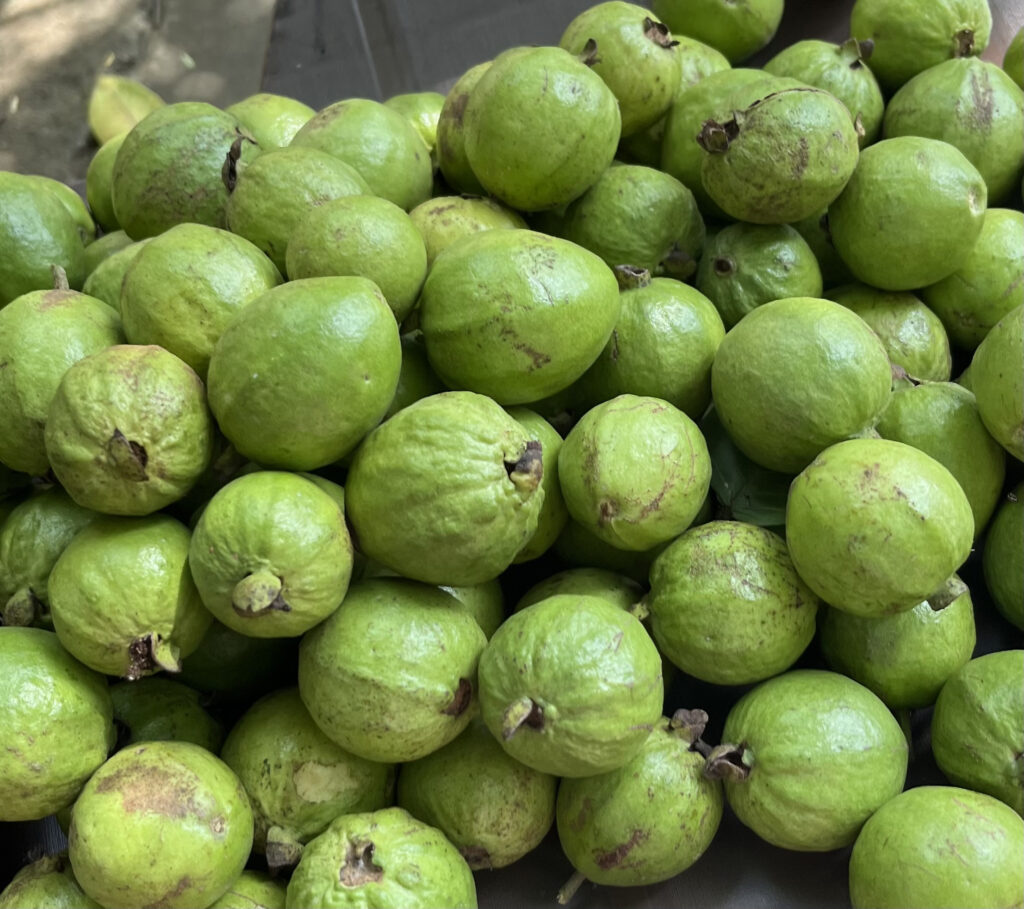
Just outside my home in India, in the small neighbourhood park, stands a guava tree.
It isn’t marked, fenced, or named. But no one else had claimed it. So I did.
It’s mine now—not in title, but in feeling. It stands tall, generous, fruit-laden. I’ve always been drawn to trees like this, carrying the weight of ripeness so uncomplainingly, as if giving is just part of their being.
I don’t know why it still fills me with wonder—that fruit grows quietly on branches, needing no permission, no applause. That vegetables and fruit are just… there. Free. Given. It’s humbling and miraculous all at once.
My fascination with trees goes with me everywhere. Wherever I travel—whether in India or back home in the UK—I find myself standing beneath them, placing a hand on their bark, pausing long enough to feel their stillness. I think about what they’ve witnessed—storms, sunshine, lovers, loneliness. Trees keep secrets. Perhaps because silence is its own kind of wisdom.
My husband used to find it amusing. I’d stop mid-walk to admire the shape of a trunk or take a photo of a branch. But now, somewhere along the way, he’s begun to notice too. Whether we’re walking through the Lakes or heading up Rivington, he’ll point out trees to me. “That one looks like you’d like it,” he’ll say, half-smiling. And I do. Sometimes I think he sees it too now. Or maybe he just sees me.
This guava tree, though—this one feels different. I see it every day. I’ve tasted its fruit. There’s something sweeter about fruit you haven’t paid for, something beautifully rebellious about plucking something the earth has grown for no one and everyone.
But of course, I’m not the only one drawn to it.
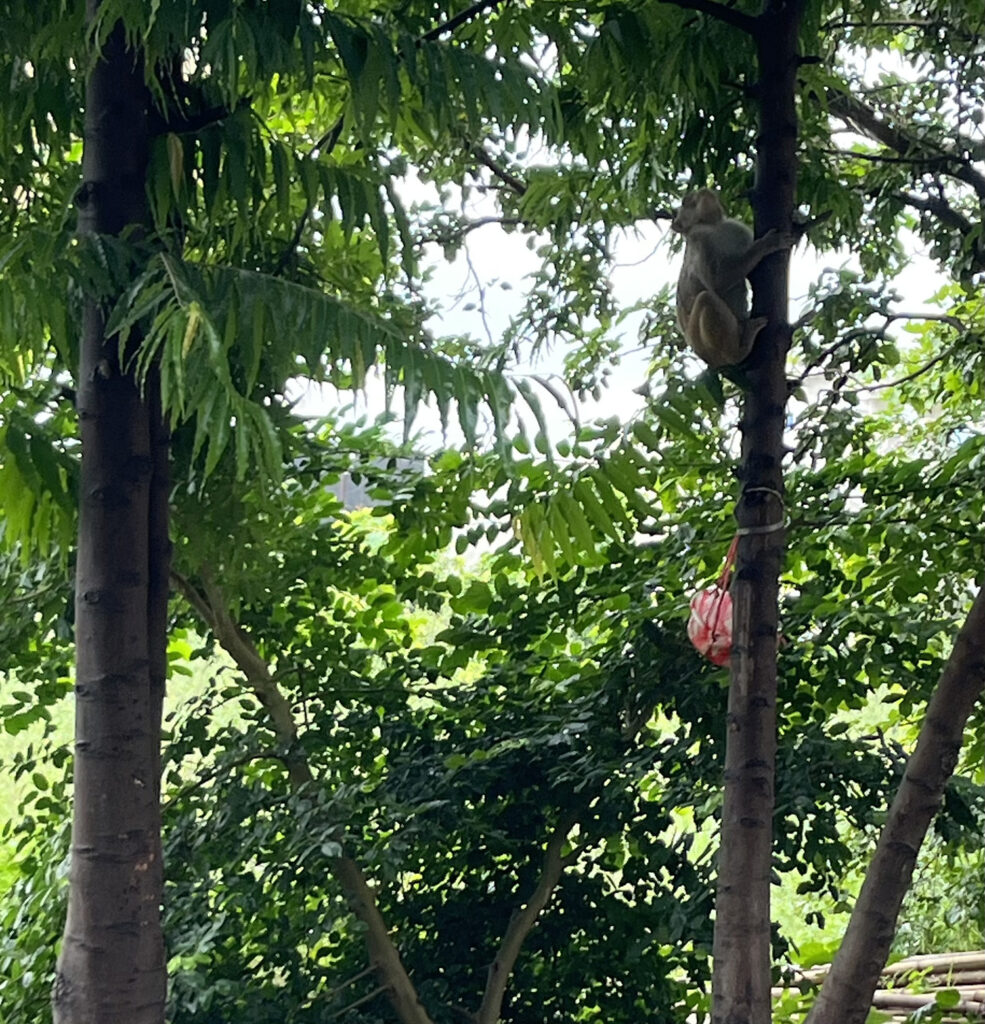
The monkeys come in packs. Not the gentle, curious kind, but the loud, urgent, chaotic kind. They raid the tree, tear into the fruit, take a bite and toss the rest. They leave half-eaten guavas scattered like wounded soldiers across the park. And they don’t stop there.
They leap into balconies, swing onto railings, barge into homes. Twice now, they’ve entered ours—ripping open bags, destroying plants, leaving little disasters in their wake. And once, while my cousin and I were clearing the mess they’d left behind, he told me something I didn’t know.
Just behind our house is a school for the visually impaired. A few years ago, they had the same monkey problem. But they found a solution: they brought in a langur—tall, black-faced, dignified. The kind of presence monkeys don’t mess with. And it worked. The area became a monkey-free zone. A rare, peaceful pocket.
But of course, the langur didn’t stay. Perhaps it was rented, perhaps borrowed. Whatever the reason, it was sent away. And with its absence, the old chaos returned—louder than before. The monkeys are back now, and they come like they’ve got a score to settle.
I sometimes wish they’d bring the langur back.
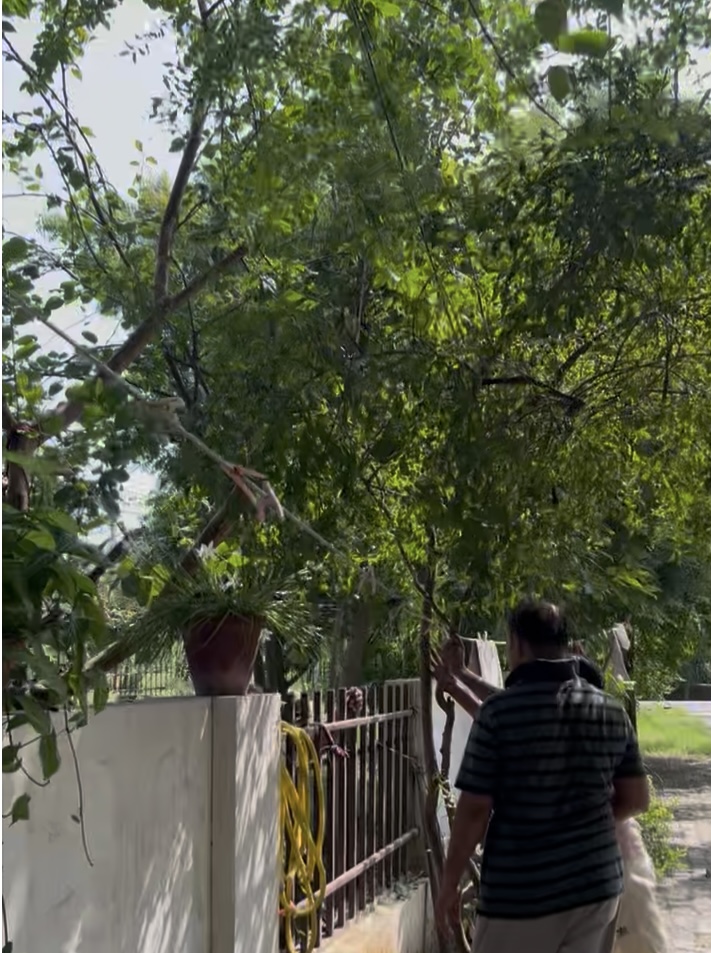
In the meantime, we’ve begun trimming the guava tree. Cutting back the branches, reducing the fruit. A quiet heartbreak. But perhaps necessary.
Still, I can’t stop loving that tree. Even with the monkeys, even with the mess.
Because life here is like that—full of sweetness and small disasters, of fruit and feral interruptions. You learn to hold both. You learn to marvel, and to clean up. You learn to laugh, and then to trim back what you love, just enough to protect it.
And always, I return to the tree.
Some days I pick a guava before the monkeys do. I hold it in my hand like a tiny, stolen miracle. And I remind myself—this, too, is life. Wild, bruised, beautiful.